
Accelerated Resolution Therapy
What is Accelerated Resolution Therapy?
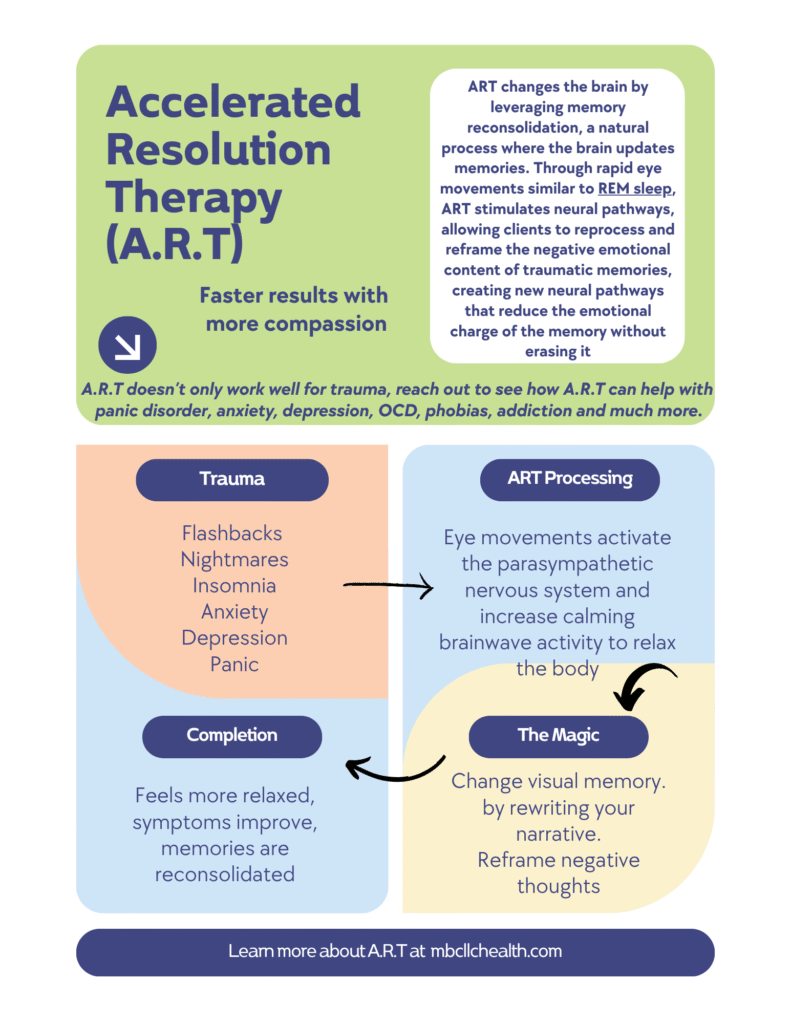
Accelerated Resolution Therapy (ART) is a proven, evidence-based therapy that helps people find rapid relief from trauma, stress, and emotional challenges. It supports lasting healing in fewer sessions, making it an effective option for individuals seeking meaningful change without long-term treatment. ART works by helping the brain resolve distressing memories safely and efficiently.
ART uses guided eye movements and imagery replacement techniques to reprocess traumatic experiences. These techniques allow the brain to reorganize how memories are stored, reducing emotional distress. Unlike traditional talk therapy, Accelerated Resolution Therapy does not require clients to repeatedly relive or describe traumatic events in detail. This approach makes ART both gentle and highly effective for trauma recovery.
Through bilateral eye movements similar to those that occur during REM sleep, Accelerated Resolution Therapy reduces the emotional and physical reactions connected to traumatic memories. Clients often notice decreased anxiety, tension, and emotional overwhelm. The imagery replacement process allows individuals to replace negative or disturbing images with positive or neutral ones. The memory remains intact, but its emotional charge and stress response significantly decrease or disappear.
Accelerated Resolution Therapy effectively treats post-traumatic stress disorder (PTSD), anxiety, depression, phobias, grief, and other trauma-related conditions. Research and clinical outcomes show that ART delivers fast results. Many individuals experience noticeable relief in as few as one to five sessions for single-event trauma. This efficiency makes ART an appealing choice for those who want results without extended therapy.
By addressing both the mind and body, Accelerated Resolution Therapy helps individuals restore emotional balance, improve overall well-being, and regain a sense of control. ART empowers people to move forward with clarity, confidence, and resilience while leaving distressing experiences in the past

Key Aspects of ART
During Accelerated Resolution Therapy, clients replace the distressing images associated with traumatic memories with positive, chosen images. The factual memory of the event remains. However, the intense negative emotional and physical reactions are reduced or eliminated.
Accelerated Resolution Therapy uses a step by step protocol that combines several therapeutic approaches, including:
Eye Movements: The therapist guides the client’s eyes to move back and forth rapidly, similar to the movements during REM (Rapid Eye Movement) sleep. This stimulates the brain’s processing of memories and promotes a relaxation response.
- Voluntary Image Replacement (Imagery Rescripting): The core of the therapy. A therapist guides the client to actively and consciously change the negative mental picture of the traumatic event into a more positive or desired one. This helps to “reprogram” how the memory is stored.
- Elements from other therapies: It draws upon techniques from Eye Movement Desensitization and Reprocessing (EMDR), Cognitive Behavioral Therapy (CBT), Gestalt therapy, and Guided Imagery.
- Focus on Imagery, Not Detailed Narration: A unique benefit of Accelerated Resolution Therapy is that clients do not have to talk in detail about their traumatic experience. Instead, they recall the images silently, which can make the process less overwhelming.
Conditions Treated: While primarily known for treating Post-Traumatic Stress Disorder (PTSD), research also supports the use of Accelerated Resolution Therapy for:
Anxiety and Panic
Depression
Phobias
Obsessive-Compulsive Disorder (OCD)
Grief and bereavement
Relational Trauma
EMDR vs ART
EMDR
- Often requires 10-20 sessions
- Requires that you talk about your trauma
- Reintegrates and desensitizes negative memories
- Focuses on thoughts and feelings
- Uses free association
ART
- Usually requires 1-3 sessions
- Requires little to no talking about your trauma
- Replaces negative memories with positive ones
- Focuses on images and sensations
- Uses a protocol with resolution at the end of each session
Why Choose ART?
Many people seek Accelerated Resolution Therapy (ART) because it offers a fast, empowering approach to resolving emotional distress without requiring months of therapy or repeated retelling of painful memories. As an evidence-based trauma treatment, ART therapy is designed to help individuals process difficult experiences efficiently while maintaining emotional safety and control.
For some clients, Accelerated Resolution Therapy provides a powerful breakthrough when other therapies for trauma, PTSD, anxiety, or depression have plateaued. For others, it serves as an effective first-line therapy, offering meaningful relief in a short-term, structured format. Because ART typically requires fewer sessions than traditional talk therapy, it can also be a cost-effective mental health treatment option.
Accelerated Resolution Therapy represents an innovative blend of structured protocol and deep emotional processing. By using guided eye movements and voluntary image replacement, ART helps clients reduce the emotional intensity of distressing memories without reliving the pain. The core promise of ART therapy is simple yet transformative: individuals can remember the facts of difficult experiences while removing or replacing the negative images and sensations attached to them—restoring calm, clarity, resilience, and emotional well-being in the process.
You can find us at
nina@mbcllc.health
PHONE NUMBER
703-705-9880
LOCATION
6611 Jefferson Street, Suite 202
Haymarket, Va 20169