
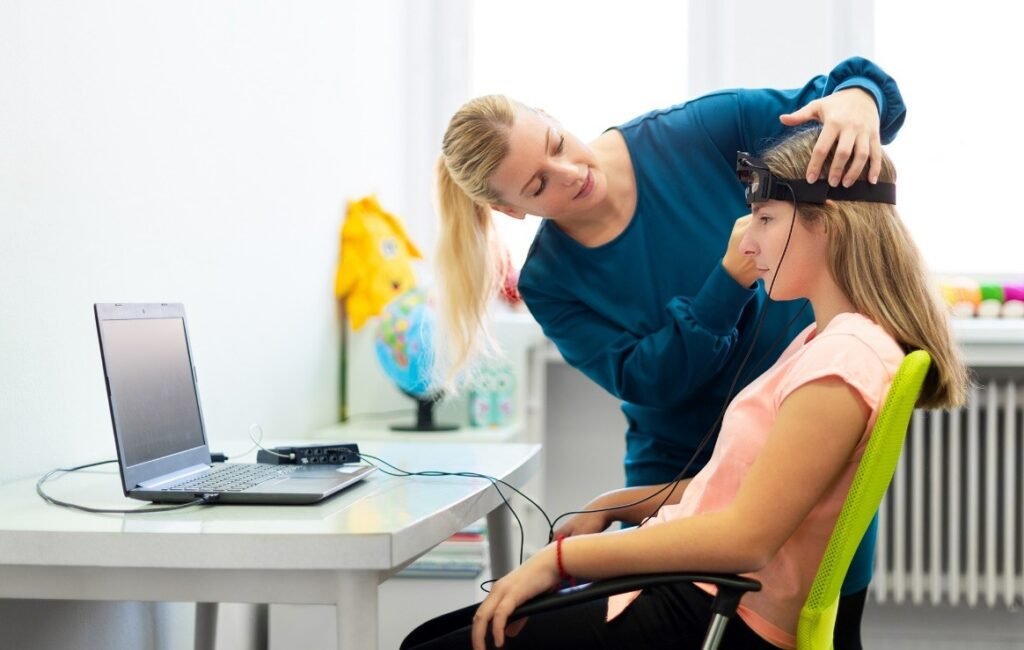
Neurofeedback is receiving more attention these days as a treatment for mental health issues. Why? Because it is a safe, non-invasive way to help your brain learn how to regulate itself. Consequently, regulation improves mental health and performance in multiple key aspects of your daily life.
Now more than ever, neurofeedback services are popping up as a therapy option in more mental health practices. However, it’s not always easy to take the next step – choosing a provider.
In the event that you are already engaging in talk therapy or any other form of therapy, the neurofeedback provider you select should be willing to coordinate services with your current therapist. Your current therapist may even have a recommendation on a neurofeedback provider.
However, if you are looking for help with a mental health condition for the first time, choosing a provider can be more difficult. Take a minute to consider these things when looking for a neurofeedback provider:
- Certification: First and foremost, the provider should be certified by the Biofeedback Certification International Alliance or BCIA. You can find a certified practitioner at their web site: https://www.bcia.org/. This certification indicates that the provider has received training providing a high standard of care within a clinical practice environment. Look for providers who are designated as Board Certified in Neurofeedback (BCN).
- Licensed Mental Health Provider: When considering neurofeedback, it is important that your provider be a trained mental health professional who is licensed to practice in your state.
- Knowledgeable about all approaches: The provider should be knowledgeable about the different neurofeedback practices and equipment. Some examples are Hemoencephalography (HEG) Neurofeedback, S-Loreta, Z-score, Infra Slow Frequency, Lens, and Amplitude neurofeedback training. Neurofeedback is not a one size fits all process. The provider should be willing and able to discuss which method may be best for the individual.
- Expert Analysis: The provider should be able to analyze neurofeedback brainwave assessments and clearly explain what the data shows at the start of treatment. The provider should work with the individual to adjust neurofeedback treatment as needed to maximize the therapeutic benefits.
- Availability: When offering home training, the provider should talk with the individual on a regular basis to check status and monitor progress. I believe in weekly check-ins to monitor progress.
- Continuous Training: The field of neurofeedback is constantly evolving. No matter how experienced, your provider should be continually updating their knowledge of the field. Ask them about their recent continuing education and training efforts.
Residents of DC, MD, VA and PA can learn more about neurofeedback and schedule a consultation with Mind Body Connections at https://www.mbcllchealth.com .