
Substance Use & Recovery Support In Northern Virginia
Substance use is often a solution—not the problem.
For many people, alcohol or drug use begins as a way to cope with stress, anxiety, trauma, or emotional pain.
Over time, it can become a pattern that feels difficult to change, even when you want something different.
If you’re struggling with substance use, it doesn’t mean you lack willpower—it means your brain has learned a powerful way to manage discomfort. The good news is that these patterns can change.
Understanding Substance Use
Substance use is closely connected to how the brain processes stress, reward, and emotional regulation.
You may notice:
-
- Using substances to cope with anxiety, stress, or difficult emotions
-
- Cravings that feel automatic or hard to control
-
- Feeling stuck in cycles of stopping and starting
-
- Shame, frustration, or loss of control
-
- Difficulty relaxing or coping without substances
In many cases, underlying factors like trauma, anxiety, or nervous system dysregulation are driving the behavior.
Why Change Can Feel So Difficult
Substances directly affect the brain’s reward system and nervous system.
Over time, your brain begins to rely on them to feel calm, focused, or “okay.” This can make stopping feel not just difficult—but overwhelming.
That’s why insight alone isn’t enough. Lasting change comes from working with the brain and nervous system to build new patterns of regulation and resilience.
A Brain-Based Approach to Recovery
At Mind Body Connections, I use neuroscience-informed, compassionate approaches that address the root of substance use—not just the behavior.
These methods help reduce cravings, regulate the nervous system, and support lasting change without the use of medication.
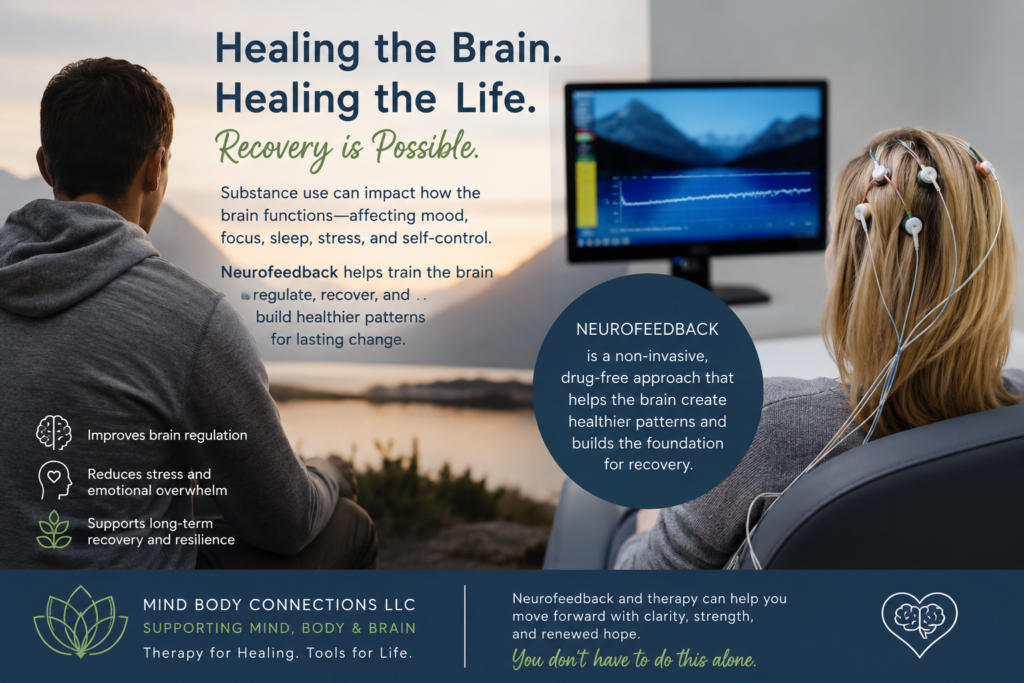
Neurofeedback for Addiction Recovery
Neurofeedback helps retrain the brain to function in a more balanced and regulated way.
Substance use can disrupt brainwave patterns related to impulse control, stress, and reward. Neurofeedback provides real-time feedback that helps your brain learn healthier patterns.
It can support:
-
- Reducing cravings and impulsivity
-
- Improving emotional regulation
-
- Decreasing anxiety and stress
-
- Enhancing focus and mental clarity
-
- Supporting long-term recovery stability
Over time, many clients feel more in control and less driven by automatic urges.
Accelerated Resolution Therapy (ART)
Accelerated Resolution Therapy (ART) helps the brain process and release distress that may be contributing to substance use.
Many people use substances to cope with unresolved experiences, stress, or emotional pain. ART allows the brain to reprocess these experiences without needing to relive them in detail.
ART can help with:
-
- Trauma and underlying emotional triggers
-
- Stress and anxiety that drive substance use
-
- Cravings linked to specific memories or situations
-
- Reducing the emotional intensity behind urges
As these underlying patterns shift, the need to rely on substances often decreases.
The Cortina Method For Compulsive Behaviors
The Cortina Method works directly with the brain’s processing system to resolve patterns that keep people stuck in cycles of use.
Rather than focusing only on behavior, this approach helps “unstick” deeper brain responses related to:
-
- Compulsive patterns and urges
-
- Emotional overwhelm
-
- Intrusive thoughts or internal conflict
-
- Stress-driven behaviors
Clients often experience a sense of relief and increased control as their brain begins to respond differently.
What Recovery Can Look Like
Recovery is not just about stopping substance use—it’s about feeling better without needing it.
As your brain and nervous system become more regulated, you may notice:
-
- Reduced cravings and urges
-
- Greater emotional stability
-
- Improved ability to cope with stress
-
- More clarity and focus
-
- A stronger sense of control and confidence
Change becomes more sustainable when your brain no longer relies on substances to function.
A Supportive, Non-Judgmental Approach
Recovery looks different for everyone. Whether you are just starting to question your relationship with substances or are actively working toward change, support can make a meaningful difference.
This is a space where you can explore what’s driving your patterns and begin to shift them—without judgment or pressure.
You Don’t Have to Do This Alone
If you feel stuck in patterns of substance use, there is a reason—and there is a path forward.
With the right brain-based support, lasting change is possible.