If you have ever felt like you understand why you feel anxious, overwhelmed, stuck, or emotionally reactive—but still cannot seem to change it—you are not alone.
Many people spend years in therapy learning coping skills, processing difficult experiences, and gaining insight. While talk therapy can create meaningful change, some people continue to feel like their nervous system and brain are still working against them.
This is where combining neurofeedback and talk therapy can make a powerful difference.
At Mind Body Connections, LLC, treatment focuses on both the mind and the brain—helping clients create lasting change emotionally, physically, and neurologically. Neurofeedback supports healthier brain functioning, while evidence-based psychotherapy helps clients process experiences, build coping skills, and move toward the life they want.
What is Neurofeedback?
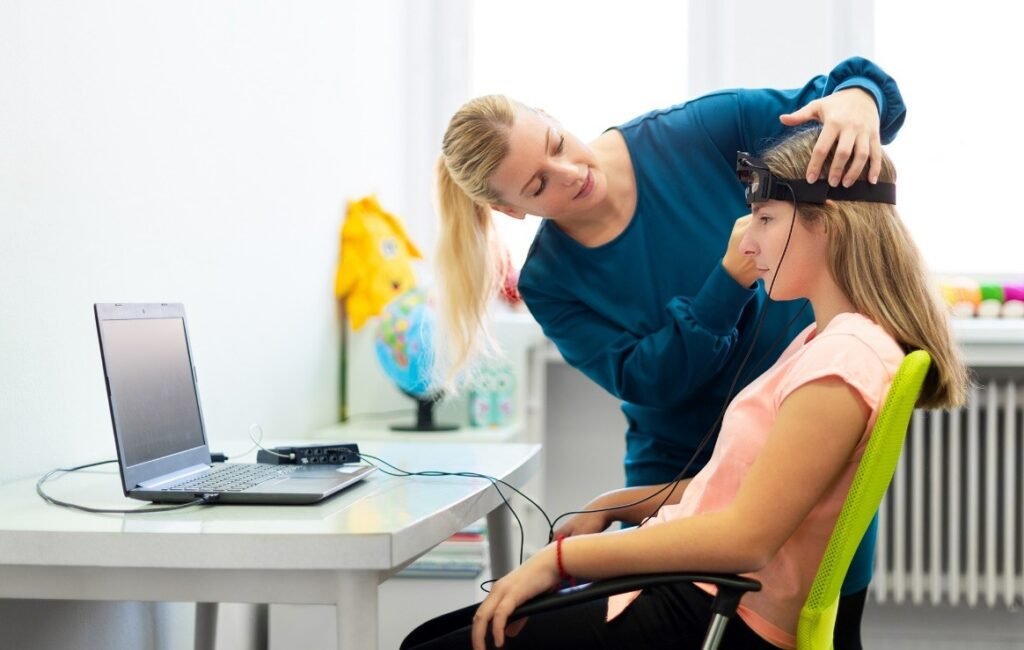
Neurofeedback is a non-invasive brain training approach that encourages the brain to develop healthier patterns of activity. The goal is not simply symptom management—it is helping the brain function more efficiently.
Research shows the brain has an incredible ability to adapt and change, known as neuroplasticity. Neurofeedback supports and encourages this process by helping the brain build healthier patterns over time. Neurofeedback may support concerns including:
- Anxiety
- Depression
- PTSD and trauma
- ADHD and attention difficulties
- Sleep challenges
- Emotional regulation difficulties
- Stress-related symptoms
At Mind Body Connections, neurofeedback is part of a comprehensive treatment approach focused on helping people feel and function better.
Why Talk Therapy Still Matters
Talk therapy provides something equally important: a place to understand experiences, strengthen resilience, and create emotional change.
Mind Body Connections uses evidence-based approaches including:
- Accelerated Resolution Therapy (ART)
- Cognitive Behavioral Therapy (CBT)
- Strengths-Based Therapy
- Solution-Focused Therapy
- Mindfulness approaches
- Internal Family Systems-informed care
These approaches help individuals work through trauma, anxiety, panic, addiction, attachment concerns, grief, insomnia, and life stressors while building practical tools for everyday life.
Why Neurofeedback and Talk Therapy Work Better Together
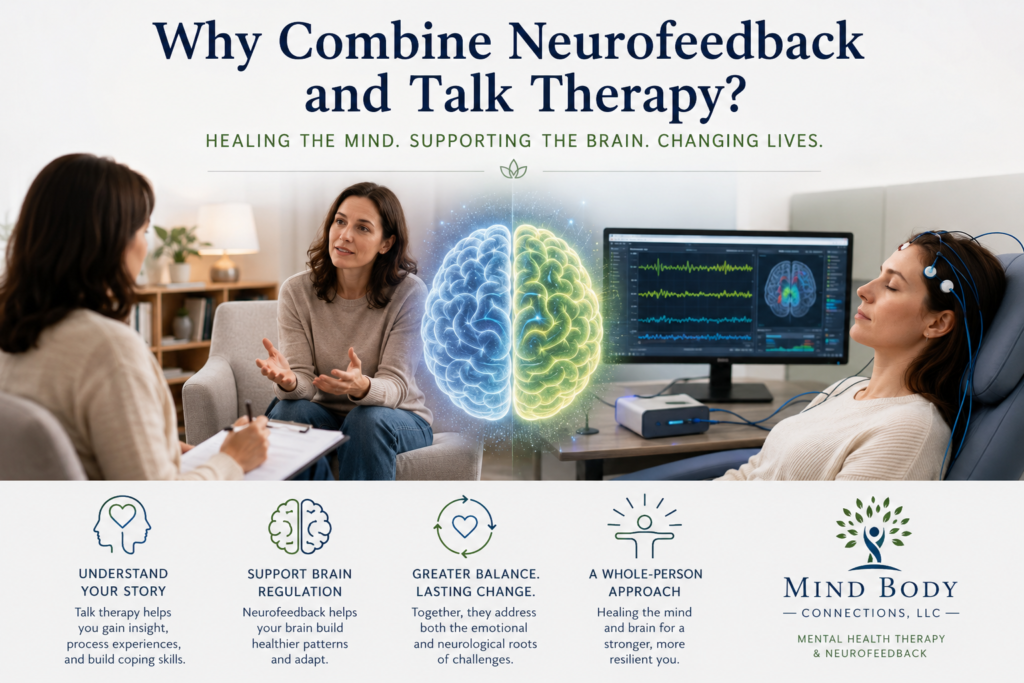
1. Talk Therapy Helps You Understand. Neurofeedback Helps Your Brain Adapt.
Many clients know what they should do but struggle to actually feel calm, improve focus, or regulate emotions.
Talk therapy builds awareness and coping skills.
Neurofeedback supports the brain’s ability to create healthier patterns that make those skills easier to access. Together, they help bridge the gap between insight and lasting change.
2. Reduced Nervous System Overload
When the brain is stuck in survival mode, emotional work can feel overwhelming.
Neurofeedback can help support nervous system regulation, making it easier to engage in therapy, process emotions, and remain present during difficult conversations. Clients often describe feeling calmer, more focused, and better able to use the tools they are learning.
3. Faster Progress for Some Clients
Many people seek therapy because they are tired of feeling stuck.
Combining approaches allows treatment to address both:
- The biological side (brain patterns and regulation)
- The psychological side (thoughts, emotions, relationships, and experiences)
For some clients, this integrated approach can help create deeper and more efficient progress.
4. Support for Trauma, Anxiety, ADHD, and Depression
When someone experiences trauma, chronic stress, anxiety, or attention challenges, symptoms are not only emotional—they can also involve nervous system regulation and brain functioning.
Combining neurofeedback with therapies like Accelerated Resolution Therapy (ART) and CBT allows treatment to support healing from multiple angles.
This can be especially helpful for:
- Trauma and PTSD
- Anxiety and panic
- ADHD and executive functioning concerns
- Depression
- Sleep dysregulation
- Emotional overwhelm
- Chronic stress
At Mind Body Connections, treatment focuses on helping clients build resilience and create meaningful, lasting change.
Healing the Mind and Brain Together
Mental health treatment does not have to be “either/or.”
You do not have to choose between understanding your experiences and supporting your brain’s ability to regulate and adapt.
Combining neurofeedback and talk therapy creates a whole-person approach—helping people strengthen emotional coping skills while supporting healthier brain functioning.
Healing is not only about talking through challenges.
Sometimes it is also about helping the brain learn a new way forward.
"Neurofeedback (brain wave training) can make the brain more receptive to change, while talk therapy provides the meaning, insight, and relational context for that change to be integrated and sustained."
---Sebern F. Fisher, Neurofeedback in the Treatment of Developmental Trauma
References
Accelerated Resolution Therapy. (n.d.). Research and information about Accelerated Resolution Therapy. Retrieved from https://acceleratedresolutiontherapy.com/
American Psychological Association. (n.d.). Understanding psychotherapy and how it works. Retrieved from https://www.apa.org/topics/psychotherapy
American Psychological Association. (2020). Clinical practice guideline for the treatment of posttraumatic stress disorder (PTSD). Retrieved from https://www.apa.org/ptsd-guideline
Arns, M., de Ridder, S., Strehl, U., Breteler, M., & Coenen, A. (2009). Efficacy of neurofeedback treatment in ADHD: The effects on inattention, impulsivity and hyperactivity. Clinical EEG and Neuroscience, 40(3), 180–189. https://doi.org/10.1177/155005940904000311
Centers for Disease Control and Prevention. (n.d.). Mental health and coping resources. Retrieved from https://www.cdc.gov/mentalhealth
Coben, R., & Evans, J. (2011). Neurofeedback and neuromodulation techniques in the treatment of autism spectrum disorders. Neurotherapy and Neurofeedback Applications in Rehabilitation Medicine, 201–224.
Hammond, D. C. (2011). What is neurofeedback: An update. Journal of Neurotherapy, 15(4), 305–336. https://doi.org/10.1080/10874208.2011.623090
National Institute of Mental Health. (n.d.). Psychotherapies. Retrieved from https://www.nimh.nih.gov
Ros, T., Baars, B. J., Lanius, R. A., & Vuilleumier, P. (2014). Tuning pathological brain oscillations with neurofeedback: A systems neuroscience framework. Frontiers in Human Neuroscience, 8, 1008. https://doi.org/10.3389/fnhum.2014.01008
Substance Abuse and Mental Health Services Administration. (SAMHSA). (n.d.). Behavioral health treatment information. Retrieved from https://www.samhsa.gov/
van der Kolk, B. A. (2014). The Body Keeps the Score. New York: Viking.
Mind Body Connections, LLC. (n.d.). Mental health therapy and neurofeedback services information. Retrieved from https://mbcllchealth.com/