Key Takeaways
Neurofeedback is a non-invasive brain training method used to help individuals with Attention Deficit Hyperactivity Disorder improve attention and self-regulation.
Neurofeedback works by monitoring brainwave activity using EEG and providing real-time feedback that trains the brain to adjust its activity.
Several randomized controlled trials (RCTs) have shown improvements in ADHD symptoms such as inattention and impulsivity after neurofeedback training.
Some research suggests neurofeedback outcomes can be comparable to stimulant medication in certain cases, while other studies show improvements may partly reflect behavioral or placebo effects.
Most experts recommend neurofeedback as part of a comprehensive ADHD treatment plan rather than a standalone therapy.
Neurofeedback for ADHD: A Brain Training Approach to Improving Focus
Attention Deficit Hyperactivity Disorder (ADHD) affects millions of children and adults worldwide, often causing difficulties with focus, impulse control, and executive functioning. While medication and behavioral therapy remain the most common treatments, many families are exploring complementary approaches such as neurofeedback. Neurofeedback—also known as EEG biofeedback—is a form of brain training designed to help individuals regulate their brain activity. With growing scientific interest and clinical use, neurofeedback has become one of the most researched non-pharmacological interventions for ADHD.
See my post on What is Neurofeedback for more information https://mbcllchealth.com/what-is-neurofeedback/


What Is Neurofeedback?
Neurofeedback is a type of biofeedback that measures brain activity using electroencephalography (EEG).
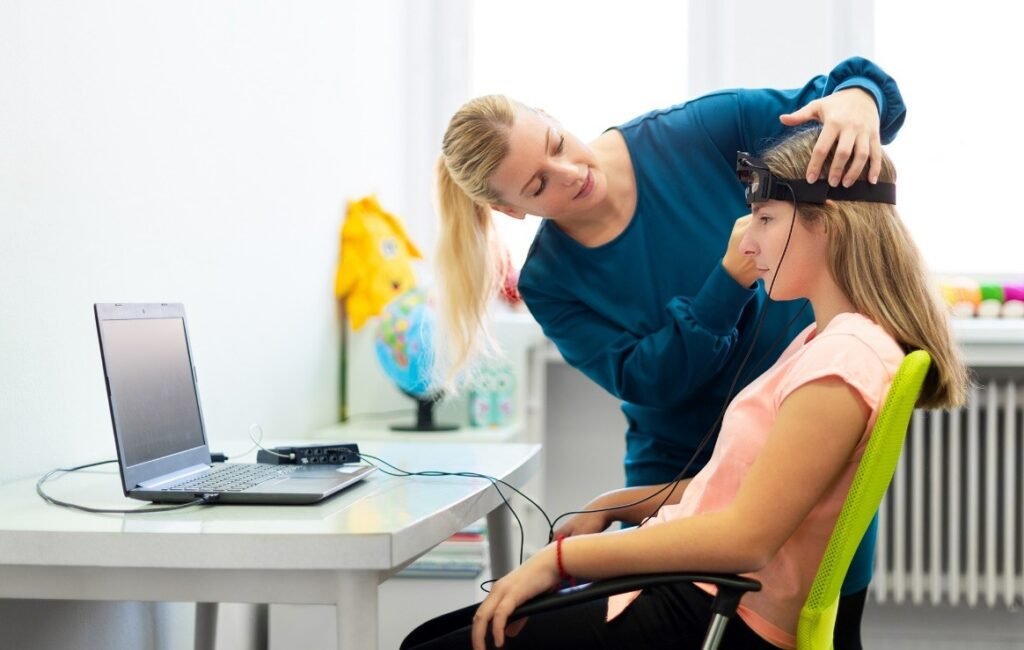
During a typical neurofeedback session:
Sensors are placed on the scalp to monitor electrical brain activity.
A computer displays the brain’s activity patterns in real time.
The individual receives feedback through games, sounds, or videos.
When the brain produces more optimal patterns, the system rewards the user.
Over repeated sessions, the brain learns to self-regulate its activity, reinforcing patterns associated with attention and cognitive control.
Why Neurofeedback Is Used for ADHD
Research suggests that individuals with Attention Deficit Hyperactivity Disorder often display distinct brainwave patterns compared to neurotypical individuals.
One commonly reported pattern is a higher theta-to-beta brainwave ratio, which has been associated with inattention and cognitive under-arousal.
Neurofeedback training typically focuses on:
Reducing excessive theta waves (linked to drowsiness or mind-wandering)
Increasing beta activity (associated with alertness and focus)
By reinforcing these healthier patterns, neurofeedback aims to improve sustained attention and behavioral control.
What Research Says About Neurofeedback for ADHD
Randomized Controlled Trials
Several randomized controlled trials have evaluated the effectiveness of neurofeedback for ADHD.
A study comparing neurofeedback with stimulant medication found that both groups showed significant reductions in ADHD symptoms, with similar improvements reported by parents and teachers. Interestingly, academic performance improvements were detected only in the neurofeedback group. Another randomized controlled trial examining neurofeedback protocols found that EEG neurofeedback reduced inattention, impulsivity, and hyperactivity symptoms in children with ADHD compared with alternative biofeedback training. Earlier research also showed that neurofeedback could produce greater symptom reductions than computerized attention training, suggesting that targeted brainwave training may influence ADHD-related neural activity.
Long-Term and Double-Blind Research
More recent studies have taken a stricter scientific approach using double-blind randomized clinical trials. In one large study involving 142 children with ADHD, both neurofeedback and control groups showed substantial improvement in inattention after treatment. However, the difference between groups was not statistically significant, suggesting that some improvements might come from non-specific treatment effects such as training, structure, or therapist interaction. A follow-up study examining outcomes 25 months later found that improvements were largely maintained, although differences between neurofeedback and control groups remained modest. These mixed findings highlight an important point: while neurofeedback may help many individuals, the exact mechanisms and effectiveness continue to be actively researched.
Potential Benefits of Neurofeedback
What a Neurofeedback Program Looks Like
Most neurofeedback treatment programs involve:
30–40 training sessions
Sessions lasting 30–60 minutes
Training conducted 1–3 times per week
Home training can be conducted daily
Improvements usually develop gradually as the brain adapts to new patterns of activity.
Is Neurofeedback Safe?
Neurofeedback is considered safe and non-invasive because it does not stimulate the brain directly. Instead, it only monitors brain activity and provides feedback.
Reported side effects are generally mild and temporary, such as:
-
Fatigue
-
Mild headaches
-
Emotional sensitivity
Working with a trained neurofeedback practitioner can help ensure protocols are adjusted appropriately.
Who Might Benefit from Neurofeedback?
Neurofeedback may be particularly useful for:
Children with ADHD who struggle with sustained attention in school
Adults seeking non-medication options for managing ADHD symptoms
Individuals who want to combine brain training with behavioral therapy or medication
Because ADHD is a complex neurodevelopmental condition, many clinicians recommend integrative treatment plans that combine behavioral strategies, lifestyle interventions, and sometimes medication.
Final Thoughts
Neurofeedback represents an innovative approach to managing Attention Deficit Hyperactivity Disorder by training the brain to regulate its own activity. While research findings are mixed, multiple randomized controlled trials suggest it may help improve attention, impulse control, and executive functioning in some individuals. As the science of brain training continues to evolve, neurofeedback may play an increasingly important role in personalized and non-pharmacological approaches to ADHD care.
References (Research Articles)
Gevensleben, H. et al. (2009). Randomized controlled trial of neurofeedback training in children with ADHD. https://pubmed.ncbi.nlm.nih.gov/19712709/
Bakhshayesh, A. et al. (2011). Neurofeedback in ADHD: A single-blind randomized controlled trial. https://pubmed.ncbi.nlm.nih.gov/21842168/
Meisel, V. et al. (2014). Neurofeedback versus medication for ADHD: randomized controlled trial. https://pubmed.ncbi.nlm.nih.gov/23665196/
Arnold, L. et al. (2020). Double-blind placebo-controlled randomized clinical trial of neurofeedback for ADHD. https://pubmed.ncbi.nlm.nih.gov/32853703/
Neurofeedback Collaborative Group (2023). Long-term follow-up of neurofeedback treatment for ADHD. https://pubmed.ncbi.nlm.nih.gov/36521694/